
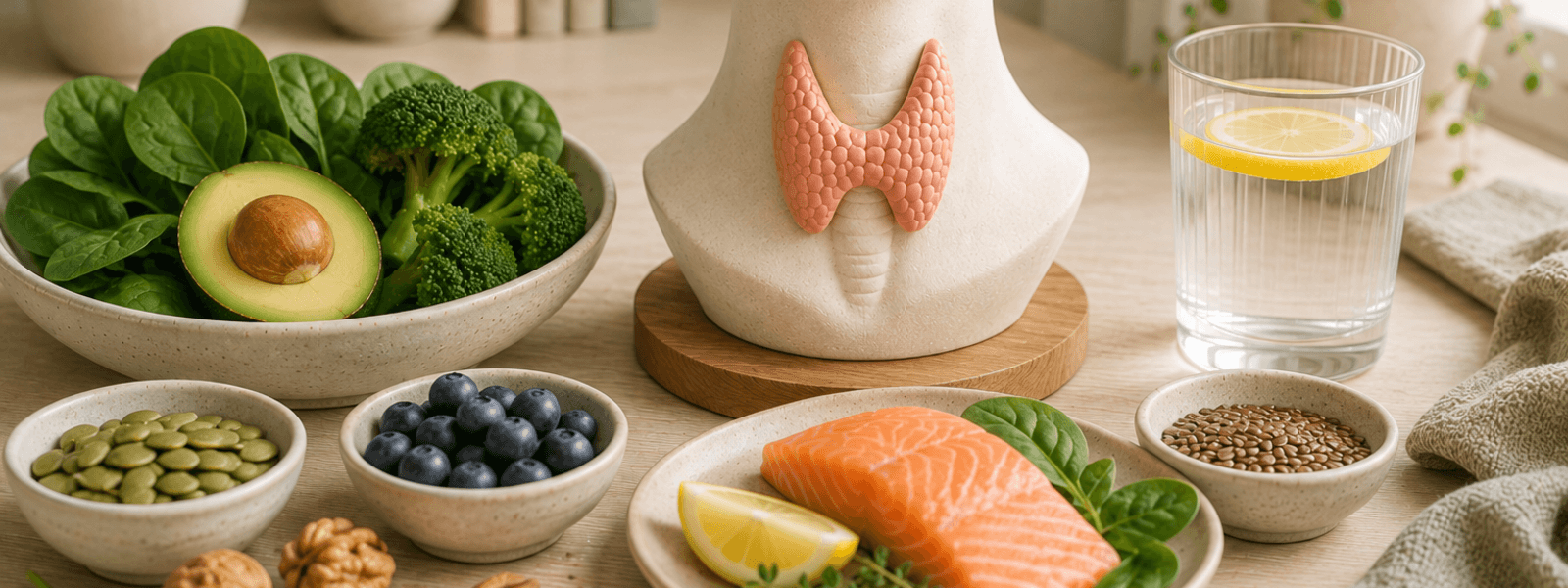
Hypothyroidism Nutrition
Nutritional Support for Hypothyroidism
Get in Touch With Us!
We aim to get back to you in 24 hours.
Nutrition can feel surprisingly complicated after being diagnosed with hypothyroidism.
You may start wondering whether you're getting enough iodine or selenium, whether you should stop eating gluten, whether supplements could help, or whether certain foods are affecting your thyroid medication.
At Hypothyroidism Nutrition, we help you take a more structured approach.
Instead of following a generic thyroid diet, we look at your overall nutritional intake and help you build a balanced, varied and practical way of eating around your individual circumstances.
Get Personalised Hypothyroidism Nutrition Support
Understanding Nutrition With Hypothyroidism
Hypothyroidism, commonly called an underactive thyroid, occurs when the thyroid gland doesn't produce enough thyroid hormones. Common symptoms can include tiredness, feeling cold, weight gain, constipation and difficulty concentrating.
Nutrition has an important role in maintaining general health, but it shouldn't be confused with treatment for hypothyroidism.
In the UK, hypothyroidism is usually treated with levothyroxine, which replaces thyroid hormone that the body isn't producing sufficiently.
Our nutritional support can complement appropriate medical treatment by helping you understand and improve what you eat.
What Can Hypothyroidism Nutrition Support Include?
Rather than assuming everybody needs the same programme, we can look at the areas most relevant to your diet.
These may include:
- Assessing your current nutritional intake
- Improving dietary variety
- Protein and fibre intake
- Balanced meal composition
- Iodine and thyroid nutrition
- Selenium and zinc
- Iron and vitamin intake
- Weight-management nutrition
- Reviewing supplements
- Gluten and dietary restrictions
- Vegetarian and vegan diets
- Meal planning
- Nutrition around levothyroxine
- Developing sustainable eating habits
The starting point is always your existing diet.
There Isn't One Hypothyroidism Diet
One of the most important things to understand is that there isn't a universal diet everybody with hypothyroidism needs to follow.
The British Thyroid Foundation states that there is no specific “thyroid diet” recommended following a thyroid diagnosis. However, certain foods and supplements can affect thyroid function or levothyroxine absorption.
This makes individual assessment much more useful than simply downloading a list of foods from the internet.
Your nutritional requirements can be influenced by what you already eat, your dietary restrictions, lifestyle, medication and personal goals.
Important Nutrients for Thyroid Health
Several nutrients are involved in normal thyroid function.
This doesn't mean that taking more of each nutrient will improve hypothyroidism.
Instead, it means your overall nutritional intake is worth considering as part of a balanced diet.
Iodine
Iodine is needed for the production of thyroid hormones.
That often leads people with hypothyroidism to assume they should start taking an iodine supplement.
However, this isn't generally necessary for people taking levothyroxine for hypothyroidism. The British Thyroid Foundation specifically advises that there is no need for these patients to take iodine supplements.
The better question isn't simply “How can I get more iodine?”
It's “Am I getting an appropriate amount from my overall diet?”
That's an important distinction.
Selenium
Selenium is another nutrient frequently associated with thyroid function.
It can be obtained through foods including fish, eggs, meat, beans, lentils and nuts.
Supplements are also widely marketed specifically towards people with thyroid conditions.
However, supplementation shouldn't automatically follow a diagnosis of hypothyroidism.
We prefer to look at what your diet already provides before deciding whether a particular nutrient deserves additional attention.
Iron
Iron is involved in numerous processes throughout the body and is another nutrient worth considering when assessing overall nutritional intake.
Food sources can include meat, beans, lentils, pulses and fortified foods.
If iron deficiency is suspected, appropriate testing and medical advice are preferable to simply beginning a high-dose supplement.
This is particularly relevant for people taking levothyroxine because iron supplements can interfere with its absorption.
Zinc
Zinc is naturally available from foods including meat, shellfish, dairy products, beans, nuts and seeds.
Like selenium, it is also commonly included in supplements marketed for thyroid health.
Your existing diet should be considered before assuming additional supplementation is necessary.
Vitamin D
Vitamin D is important for general health and deserves consideration as part of your wider nutritional picture.
Rather than treating vitamin D as a specific cure for hypothyroidism, we consider it in the same way as other important nutrients: as part of ensuring your overall nutritional needs are appropriately met.
Start With Nutritional Adequacy
A lot of thyroid nutrition advice begins with what you should remove.
We prefer to start with what your diet actually contains.
Are your meals providing enough protein?
Do you eat a reasonable variety of vegetables?
Where does your fibre come from?
What are your main sources of essential nutrients?
Have you removed major food groups?
Are supplements compensating for a very limited diet?
These questions can tell us much more about your nutrition than simply asking whether you've stopped eating gluten.
Protein and Hypothyroidism Nutrition
Protein is an important component of a balanced diet.
Depending on your preferences, sources can include:
- Fish
- Eggs
- Chicken and other meats
- Dairy products
- Beans
- Lentils
- Chickpeas
- Tofu
- Other appropriate plant proteins
We can look at both the amount and distribution of protein within your existing diet.
Someone who eats almost all of their protein at dinner may benefit from a different approach from somebody already including suitable sources throughout the day.
Fibre and Dietary Variety
Fibre can come from vegetables, fruit, wholegrains, beans, lentils, nuts and seeds.
Rather than simply concentrating on foods to eliminate, increasing the variety of nutritious foods you eat can be a useful goal.
For example, your nutritional plan might focus on incorporating a greater range of vegetables, regularly eating pulses or replacing some refined carbohydrates with higher-fibre alternatives.
Small improvements can accumulate without requiring a completely different diet.
Hypothyroidism and Weight Management
Weight gain is a recognised symptom of hypothyroidism.
If weight management is one of your priorities, nutrition support can help you look at your overall eating pattern once your thyroid condition is appropriately medically managed.
Rather than relying on a highly restrictive “thyroid weight-loss diet”, we can consider:
Meal composition
What your typical meals actually contain.
Protein and fibre
How your meals are structured.
Portion sizes
Whether portions are appropriate for your requirements.
Snacking
What you eat between meals and why.
Drinks
An often overlooked part of overall intake.
Eating patterns
How weekdays, weekends, work and social occasions affect your diet.
The aim is to develop an approach that can realistically become your normal way of eating.
Take Control of Your Everyday Nutrition
Hashimoto's and Nutrition
Hashimoto's disease is an autoimmune condition and the main cause of an underactive thyroid in the UK.
People with Hashimoto's can encounter an especially large amount of dietary advice online.
You may be encouraged to remove gluten, dairy, soya, grains or other foods.
We don't assume everybody with Hashimoto's needs to follow the same restrictive eating plan.
Instead, we consider your existing diet and individual circumstances.
If you're already following multiple restrictions, one priority may actually be ensuring your remaining diet contains enough nutritional variety.
Gluten and Hypothyroidism
You don't automatically need to eliminate gluten simply because you have hypothyroidism.
There are circumstances where somebody needs a strict gluten-free diet, most notably diagnosed coeliac disease.
But that is different from assuming gluten is unsuitable for everyone with an underactive thyroid.
If you've already removed gluten, we can consider whether the alternatives you're eating provide an appropriate nutritional replacement.
Dairy and Hypothyroidism
The same applies to dairy.
Hypothyroidism itself doesn't automatically require a dairy-free diet.
If dairy forms part of your normal diet, foods such as milk and yoghurt can contribute several nutrients.
If you don't consume dairy, your nutritional plan can consider appropriate alternatives.
The important question isn't simply whether a food has been removed.
It's what replaces it.
Supplements and Hypothyroidism
Supplements are one of the biggest areas of confusion surrounding thyroid nutrition.
You might already take:
- A multivitamin
- Vitamin D
- Selenium
- Zinc
- Iron
- Magnesium
- Vitamin B12
- Biotin
- A specialist “thyroid support” formula
When several products are taken together, ingredients can overlap.
The British Thyroid Foundation advises against excessive supplement intake and stresses that supplements should never be used as an alternative to prescribed medication.
That's why reviewing your total intake can be more useful than considering every supplement separately.
Be Careful With Biotin
Biotin deserves particular attention because high-dose biotin supplements can interfere with thyroid blood-test results.
The British Thyroid Foundation notes that high-dose biotin can produce misleading TSH, FT4 and FT3 results.
If you take biotin, make sure the healthcare professional arranging or interpreting your thyroid blood tests knows about your supplement use.
Levothyroxine and Nutrition
Many people with hypothyroidism take levothyroxine.
Food, drinks, supplements and other medicines can affect how it is absorbed.
Current NHS guidance says levothyroxine should usually be taken on an empty stomach 30–60 minutes before your first meal, caffeinated drink or other medicine of the day.
Calcium and iron supplements are among the products that can interact with levothyroxine.
This doesn't mean you should eliminate these nutrients.
Instead, how your medication, meals and supplements are timed can be important.
Medication changes should always be discussed with your doctor, pharmacist or appropriate healthcare professional.
Practical Hypothyroidism Meal Planning
Understanding nutrition is useful.
Turning that information into breakfast, lunch and dinner is where it becomes practical.
Your meal plan can take account of your:
Working hours
Do you need meals you can take to work?
Morning routine
How does breakfast fit around medication?
Family
Are you cooking for other people?
Food preferences
What will you genuinely enjoy eating?
Budget
Does your plan rely on expensive specialist products?
Cooking ability
How much preparation are you realistically willing to do?
A good nutrition plan shouldn't require you to completely reorganise your life.
Vegetarian Hypothyroidism Nutrition
Vegetarian diets can provide balanced nutrition, but the removal of meat and fish changes where certain nutrients come from.
Depending on what you eat, it can be useful to consider:
- Protein
- Iron
- Vitamin B12
- Iodine
- Selenium
- Zinc
- Vitamin D
- Omega-3 fats
Your actual food intake matters more than simply labelling your diet vegetarian.
Vegan Hypothyroidism Nutrition
A well-planned vegan diet can also contain a wide variety of nutritious foods.
However, because all animal-derived foods are excluded, careful planning around particular nutrients can become more important.
Fortified foods and appropriate supplementation may have a role depending on individual requirements.
Our approach looks at what you actually eat and identifies areas that deserve attention rather than simply providing a generic vegan thyroid diet.
Food First, Supplements Second
Where appropriate, we prefer to start with food.
Instead of immediately adding another supplement, consider:
Can this nutrient be obtained through your normal diet?
Are you actually likely to have an inadequate intake?
Are you already taking it within another supplement?
Could it interact with medication or affect blood tests?
This approach can help prevent a simple nutritional question from turning into an unnecessarily complicated supplement routine.
Why Choose Hypothyroidism Nutrition?
Focused on Nutrition
Our emphasis is specifically on understanding and improving your nutritional intake while living with hypothyroidism.
Personalised
Recommendations are based around what you actually eat rather than a universal thyroid diet.
Evidence-Informed
We don't present foods or supplements as replacements for appropriate hypothyroidism treatment.
Food-First
Where appropriate, we look at improving dietary quality before automatically introducing supplements.
Practical
Your recommendations need to work around everyday life.
Sustainable
The goal is to develop an eating pattern you can realistically maintain.
Online Hypothyroidism Nutrition Consultations
Our online consultations allow you to access personalised nutrition support conveniently from home.
Your initial consultation can consider:
Current diet → meal patterns → food restrictions → supplements → medication routine → lifestyle → goals
This provides a clearer picture of your overall nutritional intake.
From there, we can identify priorities and develop practical recommendations.
Follow-up consultations can be used to review your progress, discuss challenges and adapt your nutritional approach.
Frequently Asked Questions
What is hypothyroidism?
Hypothyroidism is an underactive thyroid. It occurs when the thyroid gland doesn't produce enough thyroid hormones.
Is there a special hypothyroidism diet?
No. There isn't a specific thyroid diet recommended for everybody diagnosed with hypothyroidism.
Can nutrition treat hypothyroidism?
Nutrition can support a balanced diet and your wider health, but it doesn't replace appropriate medical treatment. Hypothyroidism is usually treated with levothyroxine.
What nutrients are important for thyroid health?
Iodine, selenium, iron and zinc are among the nutrients commonly discussed in relation to thyroid function, but this doesn't mean everybody with hypothyroidism needs supplements.
Should I take iodine?
Don't automatically take additional iodine because you have hypothyroidism. The British Thyroid Foundation states that people taking levothyroxine for hypothyroidism don't need iodine supplements.
Do I need to avoid gluten?
Not simply because you have hypothyroidism. A strict gluten-free diet is required for conditions such as diagnosed coeliac disease, but hypothyroidism itself doesn't automatically mean gluten must be eliminated.
Can you help with weight management?
Yes. Where weight management is one of your goals, nutritional support can consider meal composition, portions, protein, fibre, snacks, drinks and overall eating patterns.
Can you review my supplements?
Your supplements can be considered alongside your overall dietary intake. Medical questions concerning deficiencies, interactions or prescribed treatment should be discussed with an appropriate healthcare professional.
Get Personalised Hypothyroidism Nutrition Support
Good nutrition with hypothyroidism doesn't have to mean restrictive diets, endless supplements or complicated rules.
We help you understand what you're currently eating, identify nutritional priorities and make practical improvements that work around your lifestyle.
Whether you want to improve your overall diet, understand particular nutrients, review your eating habits or work towards a weight-management goal, we can help you develop a clearer approach.
Get in touch today to arrange your initial consultation.
What People are Saying About Us
★★★★★
“I wanted to understand whether my diet was actually giving me the nutrients I needed. The advice was incredibly clear and helped me make sensible improvements without completely changing the foods I enjoy.”
Gemma Davies
North West
★★★★★
“I was taking several different supplements and had no idea whether I really needed them. Going through my diet and supplement routine properly gave me a much clearer understanding of my nutrition.”
Louise Fletcher
North West
★★★★★
“The biggest difference for me was learning how to build better-balanced meals. I’m eating a much wider variety of foods now and meal planning feels considerably easier.”
Priya Shah
North West
★★★★★
“I’d read so much conflicting information about iodine, selenium and foods to avoid with hypothyroidism. Having everything explained in a straightforward way made nutrition feel much less complicated.”
Emily Patterson
North West
Start Your Hypothyroidism Nutrition Journey